 Caring Mother
A wake window is simply the time your baby is awake between one sleep and the next — from wake-up to the moment they're asleep again. Time a nap near the end of the window and a baby drifts off with little fuss; overshoot it and you meet the overtired paradox: a baby too tired to fall asleep. That's why wake windows are the most useful single idea in infant sleep — and why a baby sleep tracker is the easiest way to actually use them.
Typical wake windows by age
- 0–3 months: ~30–90 minutes
- 3–6 months: ~1.5–2.5 hours
- 6–9 months: ~2–3 hours
- 9–12 months: ~3–4 hours
- By 2 years: 6+ hours
Wake windows are a starting point, not a rulebook
Ranges from sleep researchers (Cleveland Clinic, Huckleberry and others broadly agree) describe the average baby — and no one has the average baby. Your baby's cues still lead: rubbing eyes, staring off, going quiet, a first fussy note. The magic combination is age-based range + your baby's cues + your own data. After a few days of logging, you stop guessing: you can see that your four-month-old reliably lasts about 1¾ hours in the morning and 2¼ before bedtime.
What sleep tracking shows you
- Real wake windows — the gap between logged sleeps, computed from actual times instead of foggy memory.
- Nap transitions — naps consolidate from 4–5 a day in the newborn stage to about 2 by the first birthday; the log shows the shift coming (skipped naps, stretching windows) before it's chaos.
- Night patterns — whether night sleep is slowly lengthening, and how much total sleep the day really contained (it's usually more than tired parents estimate).
Signs of an overtired baby
If you see these, the window has probably run long: frantic or "wired" energy, arching and fighting the feed, inconsolable fussing that soothing barely touches, fast escalation to crying. Next cycle, try starting the wind-down 10–15 minutes earlier — and let the tracker tell you exactly when that is.
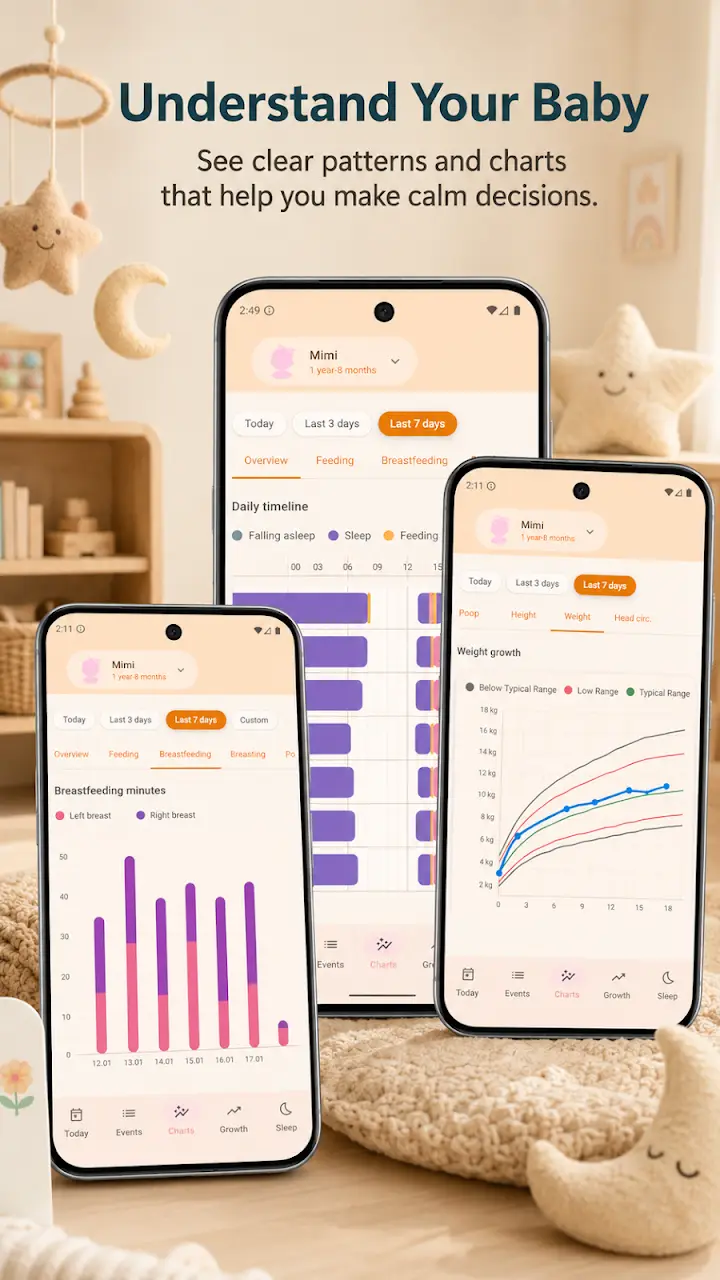
Tracking sleep with Caring Mother
- Two events, zero friction: "Falling asleep" starts the wind-down, "Sleep" runs a live timer until you tap stop — it keeps counting with the screen off.
- Sleep window picker lets you adjust times afterwards, because real life rarely happens next to a phone.
- The daily timeline chart lays each day's sleep blocks on one axis, so wake windows and rhythms literally appear as gaps you can see.
- Built-in white noise and sleep sounds with an auto-off timer, sleep-tip articles and a gentle dark mode for night logging.
A note on safe sleep
Whatever the schedule, the setup stays the same: baby on their back, on a firm flat surface, in their own sleep space, with no loose bedding, pillows or soft toys — per AAP safe-sleep guidance. Room-sharing (not bed-sharing) is recommended for at least the first 6 months. Tracking helps you time sleep; safe-sleep rules protect it.
Sleep and feeding are two halves of the same rhythm — pair this with our newborn feeding schedule guide, or see how sleep needs change with development.
This guide is general information, not medical advice. For persistent sleep difficulties or breathing concerns during sleep, talk to your pediatrician.