 Caring Mother
Milk supply runs on demand: the more regularly milk is removed, the more your body makes. That's why every pumping guide comes down to the same two words — frequency and consistency — and why a pump log is the most useful low-tech tool in the whole routine. You can't be consistent with sessions you can't remember.
Key numbers
- Newborn stage (exclusive pumping): about 8–12 sessions per 24 h, including at night
- Session length: roughly 15–20 minutes per session
- Interval: every 2–3 hours while establishing supply
- Morning sessions often yield the most — prolactin runs higher overnight
How often to pump, stage by stage
- Establishing supply (first ~12 weeks): if you're exclusively pumping, aim for 8–12 sessions/24 h — the same rhythm a nursing newborn sets. Night sessions matter in this phase; a long overnight gap is the fastest way to signal "make less."
- Nursing + occasional pumping: pump after or between feeds to build a small stash — timing matters less; consistency day-to-day matters more.
- Back at work: most parents pump roughly every 3 hours they're away from the baby, matching missed feeds.
- Winding down: drop one session at a time, spacing the rest out gradually, and let your comfort guide the pace.
These are typical patterns, not rules — output per session varies enormously between people, and that variation is normal. What deserves attention is your own trend, which is exactly what a log shows.
What to record in a pump log
- Time of each session (the backbone of consistency)
- Duration — did life cut the session short?
- Notes that explain outliers: stress, a skipped night, a new flange, a growth-spurt week
After a week or two the log answers real questions: Are gaps quietly stretching? Did dropping the 2 a.m. session change anything? Is the morning really your biggest session? Decisions get calmer when they're based on fourteen days of data instead of one worrying afternoon.
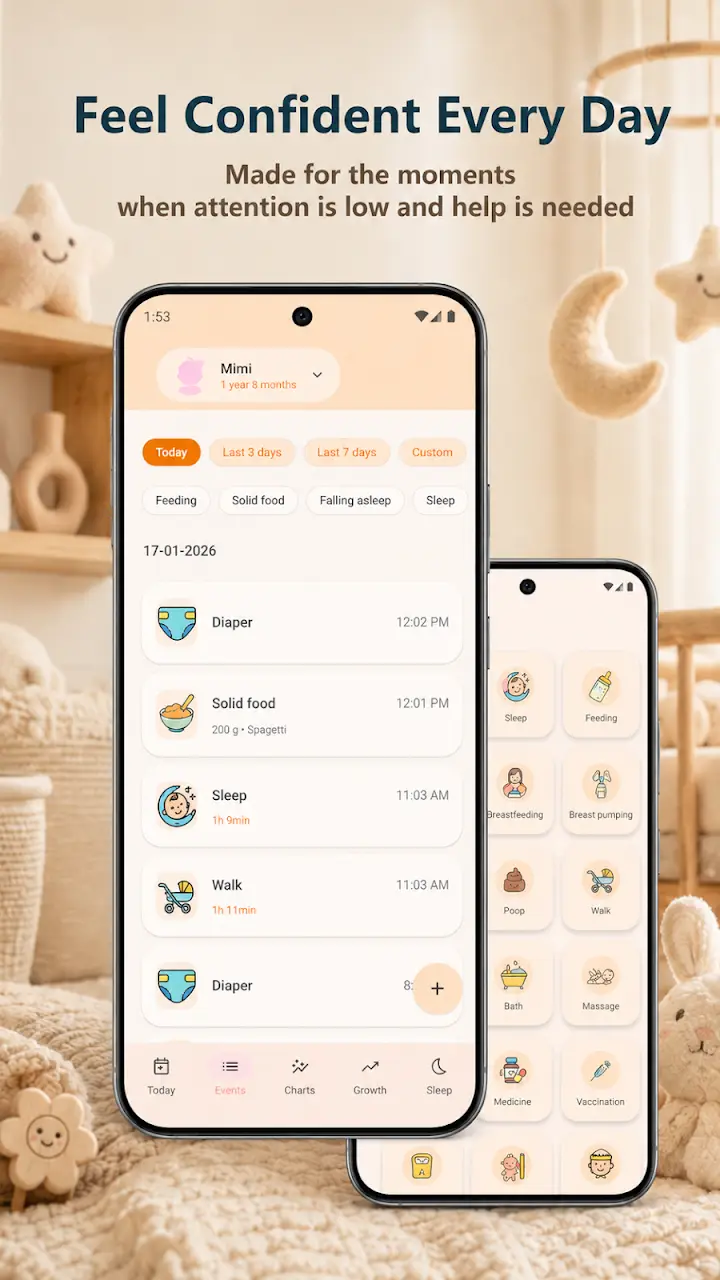
Keeping your pump log in Caring Mother
- Dedicated pumping event — start a session from the quick-log grid; a live timer tracks duration hands-free.
- Pumping sits in the same timeline as breastfeeding and bottle feeds, so the complete feeding picture stays in one place.
- Filterable history (today / 3 days / 7 days / custom) makes it easy to check consistency at a glance — or export your data to share.
- Offline-first: log in the nursery, the office lactation room or on a flight; sync later.
Gentle troubleshooting notes
- A single low session means nothing; a falling weekly trend is worth a conversation with a lactation consultant.
- Comfort matters: pumping shouldn't hurt. Pain usually means flange fit, not effort.
- Pair the log with your baby's feeding schedule and diaper counts — together they show whether intake is on track.
This guide is general information, not medical advice. For supply concerns or pain while pumping, consult a lactation consultant or your healthcare provider.